ENERGY MANAGEMENT SYSTEM
Industrial Data-Driven ESG and Digital Dual-Axis Transformation
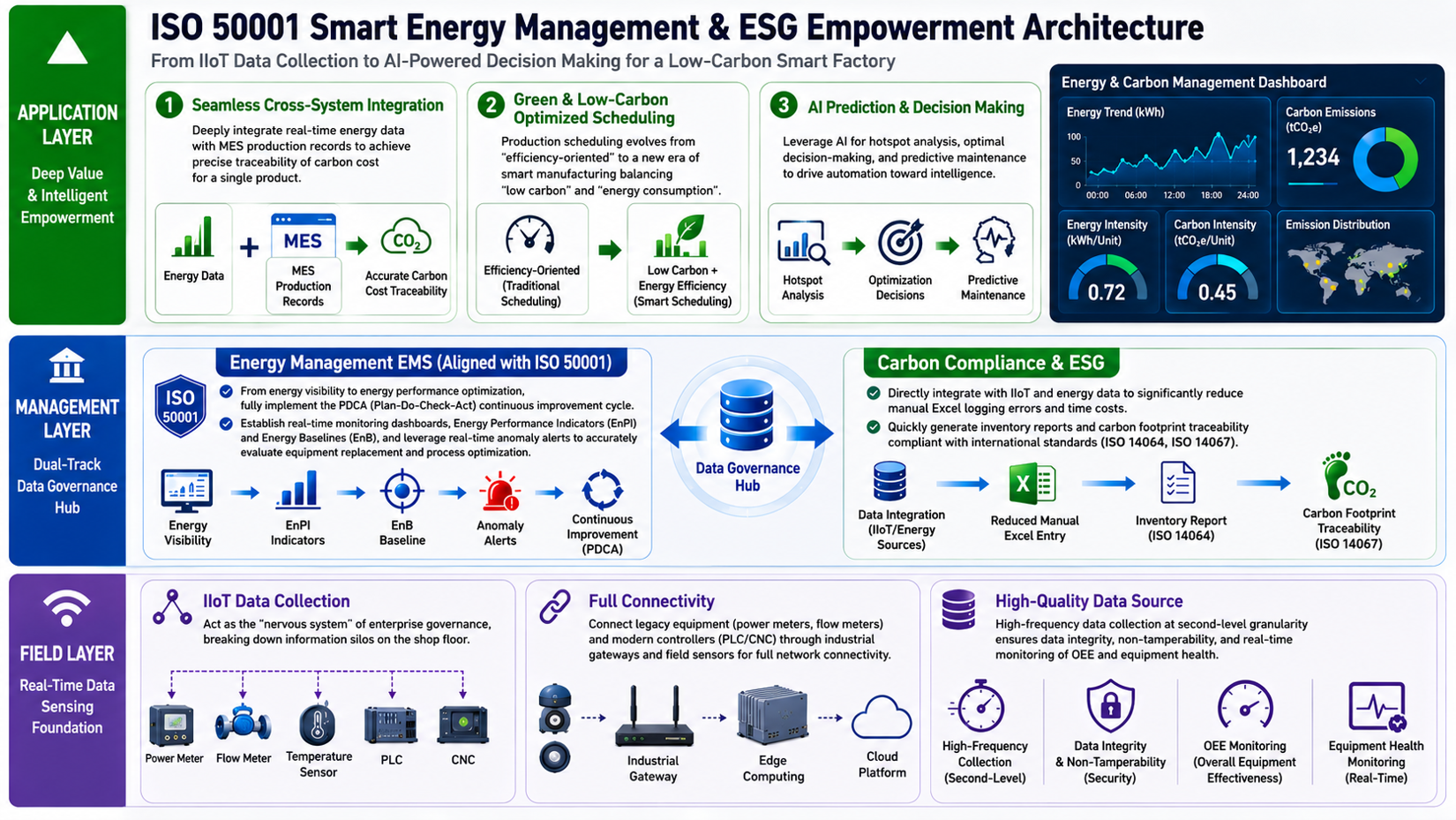
Core Vision: Establish a solid data foundation through the Industrial Internet of Things (IIoT) to fully integrate energy and carbon emission management, bridging the gap between operational technology (OT) and information technology (IT) to drive net-zero transformation. Concurrently, seamlessly interface this high-frequency, high-quality data with MES and AI to maximize the enterprise's deep application value.
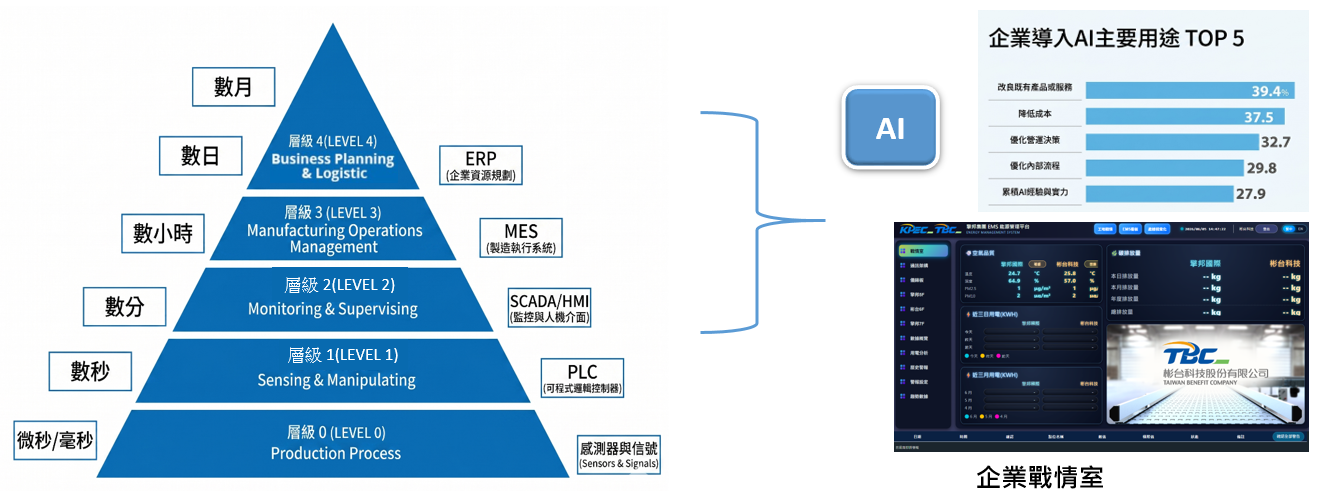
Breaking Data Silos; Establishing a Real-Time Data Foundation
Architecture Overview: > IIoT acts as the "nerve endings" of enterprise governance. Through industrial gateways and field sensors, we seamlessly connect shop-floor assets—integrating legacy machinery via meters and flow gauges, and modern equipment via PLCs and CNCs
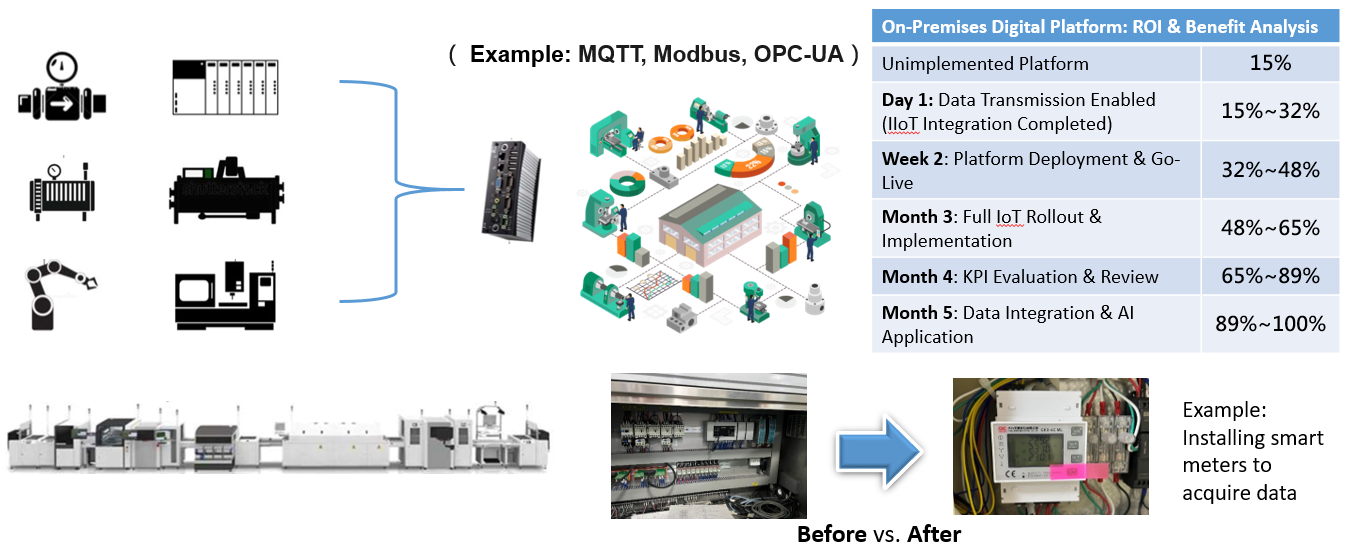
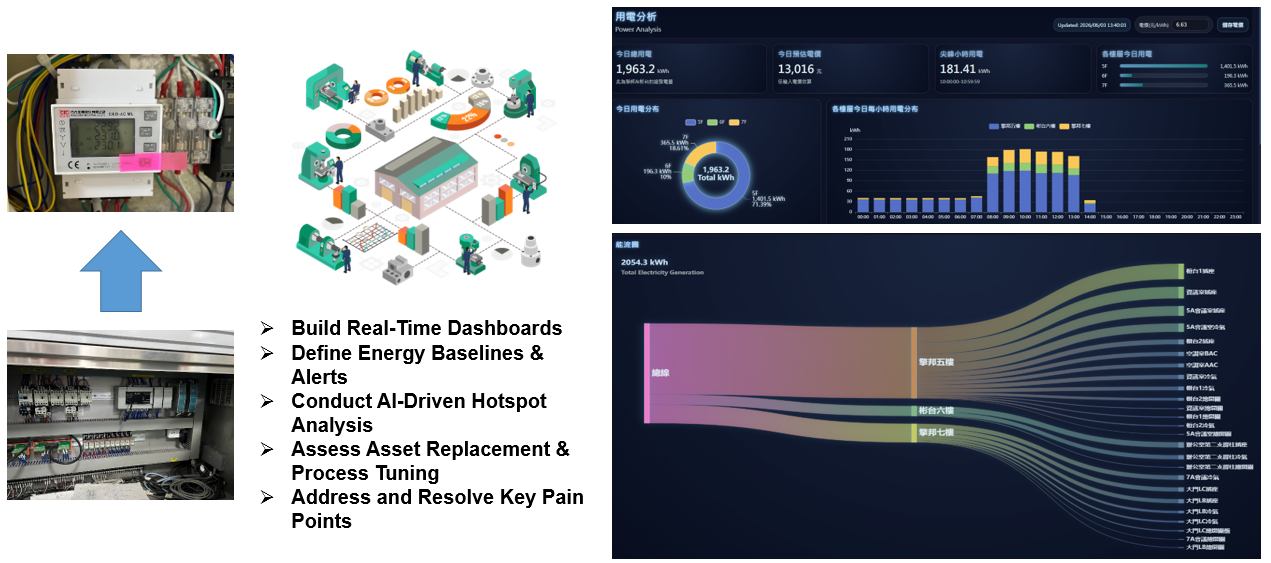
From Energy Consumption Visualization to Energy Efficiency Optimization
Architecture Overview: > Centralize governance of IIoT-collected energy data (electricity, water, boilers, and chillers) to build an enterprise energy management center.
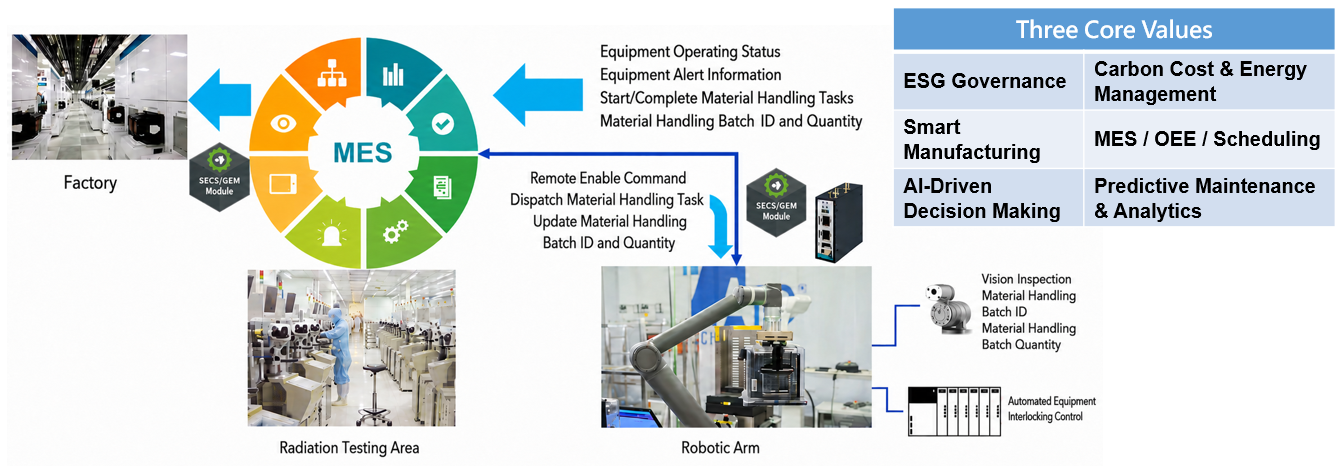
Seamless System Integration (MES and Energy Visualization)
System Architecture: > Using industrial data to eliminate system silos, this framework integrates real-time IIoT energy metrics with MES production records. This achieves accurate single-product carbon cost traceability and elevates shop-floor scheduling from an "efficiency-driven" model into a new era of AI-driven, "low-carbon optimized" smart manufacturing.
Carbon Emission Management and ESG Compliance Framework
Architecture Overview: > Direct integration with IIoT and energy data eliminates the risk of manual Excel errors and slashes administrative time costs, allowing enterprises to quickly generate internationally compliant carbon accounting reports.
ISO 50001 Smart Energy & ESG
Empowerment Framework
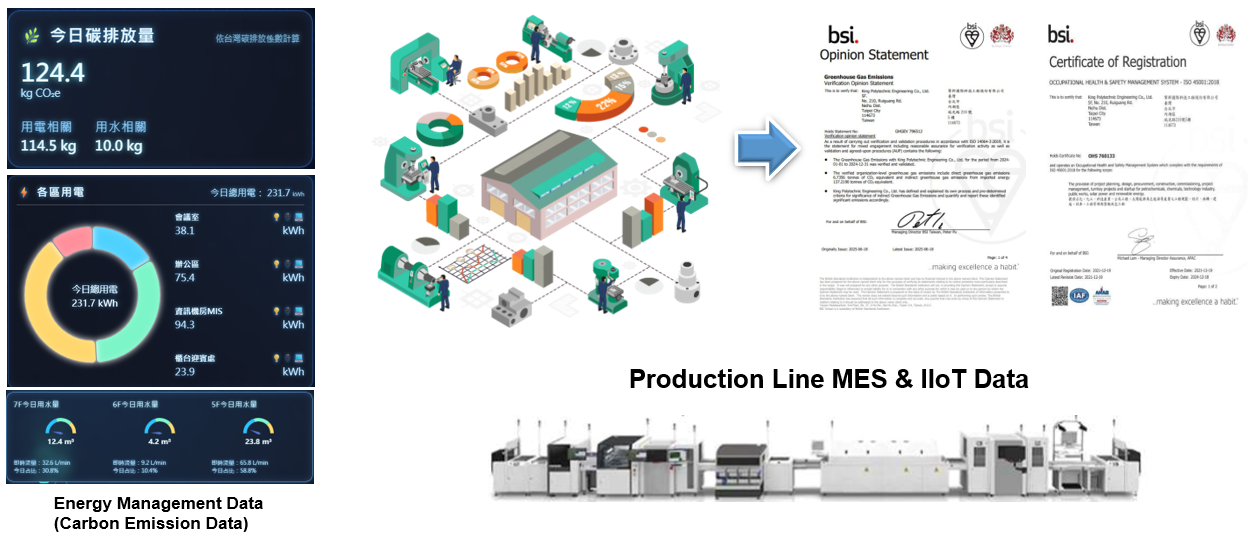
Anticipated Business Outcomes and POV Field Validation
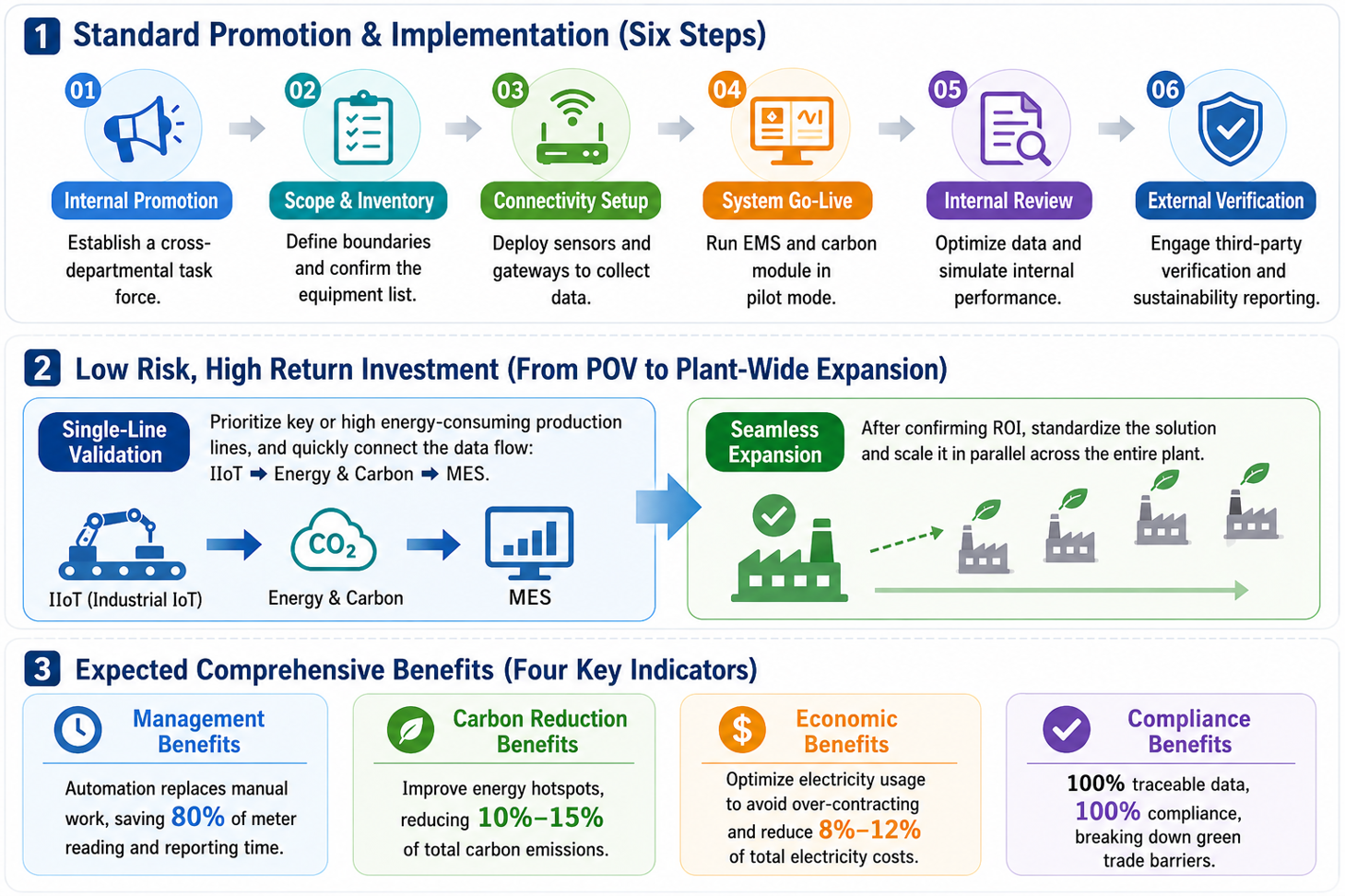
Low Risk, High Return: From POV Verification to Plant-Wide Scaling
1. Implementation Strategy: Single-Line Proof of Value (POV) ➡ Plant-Wide Replication
- Strategic Focus: Prioritize critical or high-energy-consuming lines as pilot demonstrators to significantly minimize upfront investment risks.
- Quick Wins: Rapidly bridge the "IIoT ➡ Energy & Carbon ➡ MES" data flow to achieve immediate, highly visible outcomes.
- Seamless Scaling: Once the Return on Investment (ROI) is validated, standardize the successful model for parallel expansion across the entire plant.
2. Projected Comprehensive Verification Metrics (Four Core Benefits)
- Operational Efficiency: Achieve fully automated data collection, saving 80% of the time previously spent on manual meter reading and reporting.
- Carbon Reduction: Pinpoint and precisely improve energy consumption hotspots to lower carbon emissions by 10%–15%.
- Financial Returns: Optimize power consumption patterns to avoid peak-demand penalties, reducing total electricity expenses by 8%–12%.
- Compliance Assurance: Ensure 100% data traceability for effortless auditing, effectively breaking through international green trade barriers.